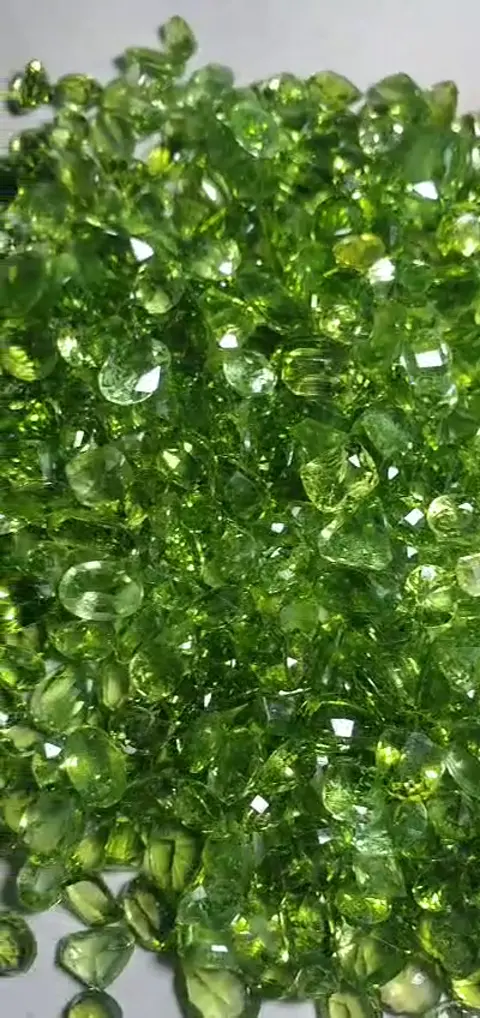
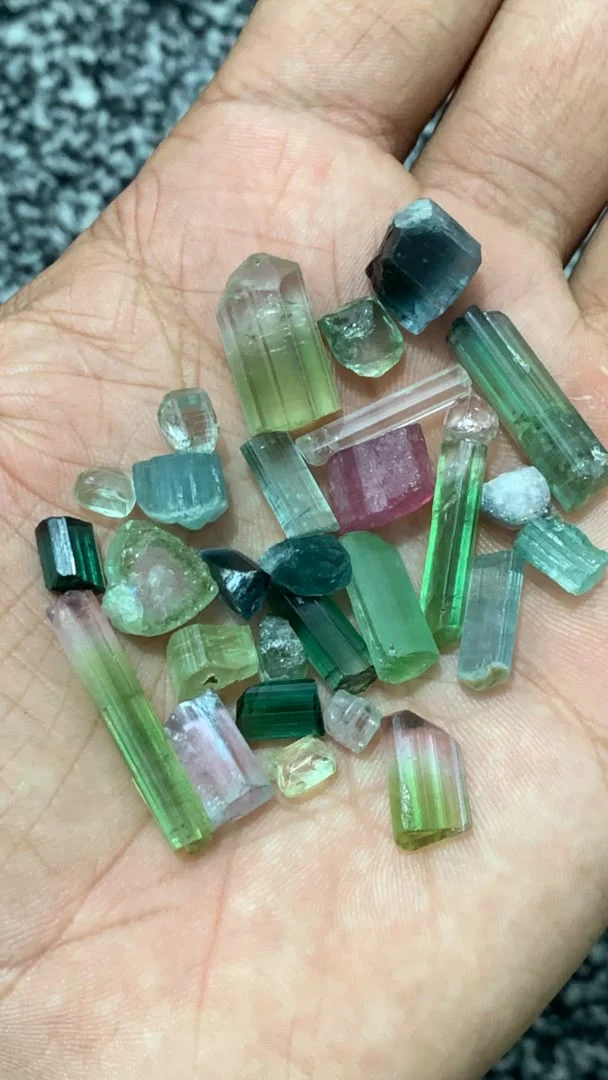
Start with the exact listing
Keep the product reference beside your notes. A listing may show one piece, a pair, or a whole parcel, and several images may simply be different views. Before comparing two selections, establish what each quote would include. On MeciMart Stones, the reference travels with your cart selection so your questions can be matched to the right listing.
Compare angles, then ask about lighting
View the still photos and play the video rather than judging from a thumbnail alone. Look at the face, sides, and reverse where available. If the color looks different between views, ask about the lighting and whether another view can be supplied. Images help you make a shortlist, but they cannot promise an exact color match on every screen.
Separate weight from dimensions
Request height, width, and depth when scale affects your decision. For a crystal, ask how it stands and whether support is included. For jewelry, ask about the ring size or the length of an earring. For a parcel, confirm whether the stated weight covers every pictured piece. A close-up or a hand in the photograph is useful context, but it is not a measurement.
Ask about condition before price comparison
Write down the features you want clarified: an edge, the base, a visible line, or a fastening. Ask about damage, repairs, and any known treatment rather than interpreting these from a single image. If identification or origin is central to the purchase, request supporting documentation. Our listings distinguish seller information from what has been independently documented.
Turn your shortlist into a useful enquiry
Add the selected listings to your quote cart and use the message field for your specific questions. Include your delivery country and explain the intended use where relevant. If you are comparing alternatives, say so. A quote request starts a conversation about price, availability, and the details; it is not a payment or a reservation.